Sunday, April 29, 2012

A Jazz Romance

Talk about hipsters – here's Toots Thielemans sharing a good word with a couple of jazz footnotes, aka Mr. and Mrs. Joe Marsala. Mrs. Marsala was, of course, better know as Adele Girard, a true jazz pioneer. Her ax was an unlikely one for the raucous, traditional Chicago-style jazz she and Joe played together. They're standing under the awning of one of 52nd Street's better-known venues, circa 1948. Is that Toots' guitar in the case – or maybe a huge harmonica? Photo by William Gottlieb

Yesterday I was poking around a Salvation Army up in Binghamton, NY, and I came across a curiosity. It was a Joe Marsala record on another of those budget, semi-legit here-and-gone labels. Now, normally I don't pay much attention to product of that sort, and Marsala's Dixie-oriented stuff never did much for me, but this record had two redeeming facets. One was the presence of ex-Ellington cornetist Rex Stewart. The other was harpist Adele Girard. Harp on a traditional jazz record? This I had to hear.

Rex Stewart
It occurred to me as I was standing in line waiting to purchase my find that Adele Girard might be in some way connected to Joe Marsala. I knew her name from somewhere, probably from a few obscure jazz sides in the stacks back home, but that was about all. After I made it back to my country pad, I found that Adele was indeed connected to Joe – via matrimony. And she and Mr. Marsala had made numerous records together over a long joint career. Gotta love the Internet! I even found a few more of their recordings in my collection.

The Marsala record that I bought appears in no discography that I can find. Bruyninckx has an entry for it on another label but no date or personnel. And the players listed on the LP are augmented by another trumpeter and a couple of reeds in places. But Rex is clearly there, and so is Adele. And because I knew you'd all be fascinated to hear this pioneer of jazz string harp, here's a cut from the record. It's "Mandy," with Rex on cornet, a mystery second trumpeter (brother Marty Marsala, perhaps?), Joe playing clarinet, pianist Dick Cary, Carmen Mastren on guitar, Pat Merola on bass, drummer Johnny Blowers, and Ms. Girard soloing on harp.

Here's a charming history of the Marsalas written by Adele herself (dictated only a few months before her death in 1993):


And here's a Soundie jukebox clip of Adele Girard, made around the time of the photo above, doing "Harp Boogie" with an unknown bassist and guitarist. As you can see, Adele was easy to look at and swings mightily. The dancer hasn't got very good rhythm, but I guess that wasn't what the boozy jukebox customers were interested in anyway.

Saturday, April 21, 2012

A Patch of Walt Dickerson

Walt Dickerson has been called the John Coltrane of the vibes. But it might be more fitting to call Coltrane the Walt Dickerson of the tenor sax – Walt was that good. Photo by Nils Winther

I've never been a big fan of the vibes. To my ears, the instrument has a metallic, impersonal sound, produced either by hammering away (Hampton) or by busy fistfuls of mallets (Burton). That's just me, but I never went out of my way to acquire vibraphone records – until one day in Boston back in 1975. 

Mister Music on Harvard Ave. – still there today!
I was working in a CBS record warehouse in Allston, driving a delivery van that serviced the company's half-dozen record stores in the Boston/Cambridge area. It was a miserable gig, entailing daily life-threatening battles with Bean Town's creative drivers while delivering skids of Captain and Tennille records. Boston in those days was a town on the make and it seemed like everybody was playing an angle, hustling up a buck. There was a guy down the block on Harvard Avenue who had a whatnot shop that purveyed new and used items, jewelry, gifts and assorted trinkets. He personified the town's "gimme" gestalt. His place was called "Mr. Music" because he had a few banged-up guitars in the window. I kind of liked him.

One day I discovered Mr. Music had added several rows of bins. The guy had bought up somebody's collection and had gone into the used record business. While looking through the albums, I came across several Prestige records by a musician I'd never heard of – a vibes player named Walt Dickerson. One of the LPs had Andrew Hill on it, and I knew his music well and liked it very much, so I took a chance and bought them all. They were a revelation!

I heard what the vibes could do for the first time. Dickerson had a unique, subtle sound that could be deep and bell-like one moment, light and woody like a marimba the next. He used short-handled mallets with hard rubber heads that he made himself. He created cascading clusters of sound when he soloed, and his pieces were sometimes long and intriguingly complex. His "To My Queen" was an absolute masterpiece. I decided it was one of the best jazz recordings I'd ever heard. I began looking for more Walt Dickerson records.

Eventually I found many more, mostly on Steeplechase, because Walt had begun recording again after about a decade away from the studio. On a trip to Philadelphia and a visit to Third St. Records, I found a fascinating vintage Dickerson LP – the one that is the subject of this post. It was on the unlikely jazz label MGM, had been recorded about fifteen years earlier and featured an unexpected sideman – one Herman "Sonny" Blount, aka the legendary Sun Ra. To add to the album's peculiarity, its selections were not Dickerson originals but a loose interpretation of Jerry Goldsmith's soundtrack score for a now obscure 1965 Sidney Portier film called "A Patch of Blue."

Elizabeth Hartman and
Sidney Portier in "A Patch
of Blue."
The film concerns a blind white girl who develops a relationship with a black man and follows the touching and painful consequences of such a liason. Despite the obvious moral lesson of its plot device, "Patch" is a moving and effective example of '60s agitprop, and the stars shine. So does the music. 

But why did Walt Dickerson record an album of music from a Hollywood movie? With Sun Ra, no less? Because an adventurous African-American A&R man working for Verve named Tom Wilson found the movie struck a chord and he wanted to do something with it. Since the film was an MGM production, and MGM owned Verve, Wilson had easy access to the recording rights. He also had an interest in edgy, envelope-pushing music. He'd been Bob Dylan's producer on "Highway 61 Revisited," had been the first to record Cecil Taylor, and was about to produce the Velvet Underground's seminal "White Light, White Heat" and Frank Zappa's first album. Wilson wanted the idiosyncratic Dickerson for his "Patch of Blue" project.

Dickerson had always chosen excellent sidemen for his recording sessions, and now he convinced Sun Ra to play piano and harpsichord on the date. Dickerson knew Ra from Philadelphia, Walt's hometown and, beginning in 1968, Ra's home as well. For the session, Ra eschewed his usual electronic keyboards and stuck primarily to piano, distinguishing the date as one of the very few that allowed listeners to hear him in the conventional role of accompanist. 

Le Sony Ra shines on stage at the 1980 Chicago Jazz Festival. For his 1966 session with Walt Dickerson, Ra was plain old Sonny Blount, no intergalactic paraphernalia involved. Photo by Gems of Jazz

The results of the "Patch" session are excellent. The Goldsmith melodies remain, but this is entirely a Dickerson date, make no mistake. Ra is remarkable, at one moment evoking the stage show at the Club Delisa on Chicago's South Side, probing the Arkestra's spaceways the next. Both Cunningham and Blank, at one time members of Sun Ra's band, turn in yeoman performances. And, of course, Dickerson is magnificent. Ironically, this would be his last recording session for a decade. Only with "Serendipity" in 1976 would he emerge from retirement.

As always, these files were ripped from the original vinyl with only a slight cleaning of the sound (there is some surface noise). The record is unfortunately brief – only fifteen minutes per side – but I think you'll agree the music is well worth the download.


A Patch of Blue
Walt Dickerson Quartet
Walt Dickerson, vbs; Su Ra, p, hrpschd; Bob Cunningham, b; Roger Blank, d.
New York, NY; 1966; MGM SE-4358

1. A Patch of Blue, Pt. 1  1:25
2. A Patch of Blue, Pt. 2  4:30
3. Bacon and Eggs  5:25
4. High Hopes  5:10
5. Alone in the Park, Pt. 1  2:55
6. Alone in the Park, Pt. 2  6:30
7. Selina’s Fantasy  3:58
8. Thataway  4:15

Find it here: http://www.mediafire.com/download/ncows8d04lt1e7p/Walt_Dickerson.rar

Saturday, April 14, 2012

Purely Inspirational

Wardell Gray was a participant in his last years in numerous West Coast jam sessions, and not just those organized by Norman Granz. Here he solos with altoist Frank Morgan and trumpeter Ernie Royal somewhere in Los Angeles in 1951. Photo by William Claxton

While digging through the stacks the other day, I came across a 10-incher that I'd forgotten I had – which is not unusual these days. I'd bought it many years ago in a Chicago used record store that occasionally had some interesting sides. This one was an EP on the Tops Masterpiece label, another cheapo '50s reprint outfit that mostly issued pop music covers by faceless studio orchestras. But this disc was different.

Called "Junior Jazz at the Auditorium," it featured a quartet of tunes by the likes of Howard McGhee, Lucky Thompson and Jack McVea and was obviously a jam session of the Jazz-at-the-Philharmonic variety. But "Junior Jazz"? That sophomoric title required a bit of looking into.

Pasadena's Civic Auditorium
My trusty friend, Walter Bruyninckx, whose invaluable jazz discography I was fortunate enough to purchase back in 1980, supplied the details. This Junior Jazz date was actually a jazz jam session and dance held at the Pasadena Civic Auditorium in 1946, several years after Norman Granz's first JATP show. It was modeled on Granz's concept and was recorded by pioneer A&R man and producer Ralph Bass for the Black & White record label. Bass started out in jazz, but soon moved on to the burgeoning R&B genre. His single greatest achievement was the signing of the then-unknown James Brown to Syd Nathan's King Records, a deed for which the short-sighted Nathan promptly fired Bass. 

Ralph Bass in 1960
Finding this EP again got me thinking about the other JATP-type shows that occurred in the wake Granz's success. Gene Norman and his "Just Jazz" releases also came to mind, and I decided I'd make this posting about the JATP-wannabes.

In the 1940s, Norman was a jazz DJ in Hollywood who aspired to greater things. He began producing concerts under the rubric "Just Jazz," and like Granz before him, recorded them for his own use. His shows included stars like Lionel Hampton, Dixielanders like Teddy Buckner, and young modernists like Max Roach and Clifford Brown. One thing led to another, and soon Norman was leasing his dubs for commercial release. He eventually formed his own record label, GNP Crescendo, and launched a four-decade career as a record producer. While quality and continuity were never GNP Crescendo's strong suit, there's a lot of good music on the label. 

Gene Norman
For this offering I've pulled selections from two separate Just Jazz concerts, one from 1947 and another from a bit later in the year (although Downbeat, in a contemporaneous review, said it was from 1948). They've been reissued several times over the decades, mostly on budget labels, but here they're from two Crown Records editions. In both cases, the Just Jazz selections were packaged with tunes from other dates and places, but those have been omitted. It's just Just Jazz.

The jazz greats featured on these sides include Wardell Gray, the aforementioned Howard McGhee, Stan Getz, Red Norvo, Dodo Marmarosa, the Nat Cole Trio and many others. The rarer Junior Jazz set showcases the superb Lucky Thompson and is worth grabbing for that reason alone. But there's another surprise on that disc – the alto player. I'd assumed it was Willie Smith – it sounded like Willie Smith – but the reference books (Bruyninckx) list the player as one Les Robinson. He turns out to be the guy who played lead alto on Artie Shaw's "Begin the Beguine." If the altoist is indeed Mr. Robinson, he was one heck of a player!

Ouch!
One other thing. As I was making the dubs for this posting, I noticed to my horror that the Junior Jazz disc had a fine crack running through half of it. It was quite audible, and that meant only one thing – Gems had to digitally remove each and every one of those pesky clicks by hand. Not to worry, though – the sound is now very clean throughout. Don't say I never did anything for you ...

So here's a concert of live jazz jams from the '40s showcasing a number of players who never made it to a Jazz at the Philharmonic show. All the material is rare, and I don't believe the Junior Jazz tunes have ever been reissued. For an added treat, Ralph Bass himself introduces those performances in a studio overdub. The cover's a hoot, too. I've given you just the album fronts as the backsides are simply listings of other schlocky LPs available on the respective labels.

As always, these tunes have been ripped from the original vinyl with, in this case, LOTS of cleaning up of the sound.


The Other JATPs
Junior Jazz at the Auditorium
Howard McGhee, tp: Jack McVea, Lucky Thompson, ts; Les Robinson, as; Jimmy Bunn, p; Irving Ashby, g; Red Callender, b; Jackie Mills, d.
Pasadena Civic Auditorium, Pasadena, CA; 1946
Tops Masterpiece L928 (originally Black & White)

1. Sunny Side of the Street
2. What Is This Thing Called Love? (Hot House)
3. Body and Soul
4. Lover Come Back to Me

Gene Norman Presents Just Jazz
Howard McGhee, tp; Sonny Criss, as; Wardell Grey, ts; Dodo Marmarosa, p; Red Callender, b; Jackie Mills, d.
Hollywood, CA; April 29, 1947
Crown CLP 5415

5. Groovin' High

Same date, personnel; omit Callender, add Charlie Drayton, b.
Crown CLP 5408

6. Hot House

Charlie Shavers, tp; Willie Smith, as; Stan Getz, ts; Red Norvo, vbs; Nat Cole, p; Oscar Moore, g; Johnny Miller, b; Louis Bellson, d.
Hollywood, CA; June 23, 1947
Crown CLP 5408

7. How High the Moon

Find it here: http://www.mediafire.com/download/vb23h92csot409s/The_Other_JATPs.rar
Monday, March 26, 2012

Lowe and Behold

Lowe-away zone: The saxophonist, right, and drummer Rashied Ali in repose on the streets of New York in 1973. From The Illustrated Encyclopedia of Jazz


Memphis-born Frank Lowe was supposedly influenced by the music of his hometown as recorded by Stax, but I never heard it in his playing. He was a Coltrane man, as far as I could tell. Of course, he never achieved 'Trane's prodigious mastery of the form nor could he hold a candle to the elder player's distinctive sound. But Frank Lowe was a journeyman musician, a competent soloist and an excellent sideman in variety of new music settings.

I got to see him in action often during the '80s when I was living in New York and Frank was a frequent member of Butch Morris's conduction ensembles. What set Lowe apart from many other players of his generation was the fact that he, like Morris, was quite comfortable playing in groups with members from the downtown scene – John Zorn's crew. The "downtown" players were mostly all white, and the "creative music" practitioners were mostly all black. Though the two groups had much in common musically, they rarely if ever performed together. Frank and Butch were the crossover exceptions.

Frank Lowe released a number of excellent records in the course of his short career, and this is one of the rarer ones. It features a stellar band assembled from the two groups mentioned above, and offers a chance to compare and contrast styles. John Zorn is present on alto (this was before his duck call period) and Polly Bradfield joins the late Billy Bang on fiddle. And how 'bout that rhythm section? Eugene Chadbourne, John Lindberg and Philip Wilson – yowzah!

The tunes are loosely arranged, free-blowing free jazz vehicles with lots of soloing by the leader and the extraordinary Butch Morris. Zorn gets some space too, and he gives Frank a run for his money. Frank's liner notes explain the pieces in detail.

When I used to see Frank Lowe, it was apparent that he frequently wasn't at his best. Word went around that he was afflicted by the jazzman's habit, though that was never confirmed. When I read in 2003 that he'd passed away from lung cancer, I realized that when I used to see him he may have been suffering from a sickness of a different sort. Small consolation in that, I guess.

Here, however, is Frank Lowe at the top of his game. As always, these files were ripped from the actual vinyl with – in this case – no cleaning of the sound whatsoever.


Lowe & Behold
The Frank Lowe Orchestra
Musicworks 3002
Frank Lowe, ts, arr; Joseph Bowie, tbn; John Zorn, as; Peter Kuhn, cl, b cl; Butch Morris, cnt; Arthur Williams, tp; Billy Bang, Polly Bradfield, vi; Eugene Chadbourne, g; John Lindberg, b; Philip Wilson, d, perc.
New York, NY; October 1977

1. Heart in Hand (or How Vain Am I) 
2. A Hipster’s Dream 
3. Lowe-commotion
4. Heavy Drama

Find it here: http://www.mediafire.com/?5k71msesbb32k70

Saturday, March 3, 2012

Jazz Choir Boy

Is this what a modern jazz innovator looks like? Naw. This guy must be your Sunday School teacher. A very presentable Gerald Joseph Mulligan at age 36. Photo by Bachrach

Here's Gerry Mulligan's first session as a leader, recorded five months after the last "Birth of the Cool" date with Miles. It's been reissued several times, but here it is in a dub from the original LP. Posting it on Gems affords me another opportunity to share a collector story.

Each LP bore this stamp.
A decade or so ago, I got a call from a guy named Matt who does deliveries for the newspaper I work for. He knew me through my radio station gig, and knew that I was a jazz fiend. He said he had some boxes in his garage I might be interested in. When I got there, he took me out back and showed me what he was talking about – a huge cache of records. The "some boxes" was actually about 50 good-sized cartons of LPs from the '50, '60s and '70s, all lovely mainstream jazz in very clean shape, and all imprinted with the previous owner's curious rubber stamp. A record collector's bonanza! Where did these records come from, I asked him?

Matt told me that back in the '80s he'd met an older woman through a book club they both belonged to. She had recently moved to the area from New York City, and seemed kind of lonely. They became friends, and he found they shared many interests. She told him she had no family but was otherwise reticent to talk about her past. Matt found that mysterious and a bit odd, but he liked her and they stayed in touch even though the book club eventually disbanded. He told me that in recent years had taken to looking in on her every so often to make sure she was OK.

Then one day Matt got a call from someone who said he was a relative of the woman. The caller said that the woman had died and they were clearing out her house. On her deathbed, she had asked that her possessions be given to her book-club friend, and the family was getting in touch with Matt to see if he had any interest. 

After getting over his surprise, Matt went to the woman's modest bungalow where he found the floor covered with boxes of LPs. It turned out the old woman was a stone jazz fan and had a substantial collection of jazz records and books. She had never said a word about it to Matt. More mystery.

Matt was loathe to let such a trove be carted to the dump, so here it was, taking up one bay of his two-car garage. Did I want any of the records? He said I could take my pick and pay him whatever I thought was fair. Deal, said I. I left with a dozen cartons about two hours later.

Allen Eager in 1948.
So why Mulligan for this posting? Well, the mysterious collector lady seemed to have a thing for Gerry. She had nearly 50 of his LPs, far more than she had of any other artist. Maybe it was his boyish good looks? I don't know, but he was her fave.

This is one of the recordings from her collection. It features Mulligan with tenor player Allen Eager, the guy who had shared front line duties with Fats Navarro in Tadd Dameron's band in 1948 and who later decided he wanted to be a race car driver and ski instructor. Here he's in superb form, trading solos with Geru on a series of original compositions. George Wallington, too, sounds great.

One other thing – the closing tune in this set takes up the whole second side of the LP. At 17-plus minutes, I have to think this is perhaps the first extended performance recorded by a single group in jazz. The long-playing record was new technology in 1951, and here Mulligan takes full advantage of its ability to capture lengthy performances. And "Mulligan's Too" is a precursor to "Tenor Madness" for its saxophonistic parry-and-thrust.

As always, these tunes were ripped from the original vinyl with only a minor cleaning of sound.


Historically Speaking
Gerry Mulligan
Prestige 7251

1-6: Gerry Mulligan, Max McElroy, bar; Allen Eager, ts; Jerry Hurwitz, Nick Travis, tp; Ollie Wilson, tbn; George Wallington, p; Phil Leshin, b; Walter Bolden, d; Gail Madden, maracas.
7: Gerry Mulligan, bar; Allen Eager, ts; George Wallington, p; Phil Leshin, b; Walter Bolden, d; Gail Madden, maracas.
New York, NY; August 17, 1951

1. Funhouse
2. Ide's Side
3. Roundhouse
4. Kaper
5. Bweebida Bobbida
6. Mullenium
7. Mulligan's Too


Saturday, February 18, 2012

Endless Jam

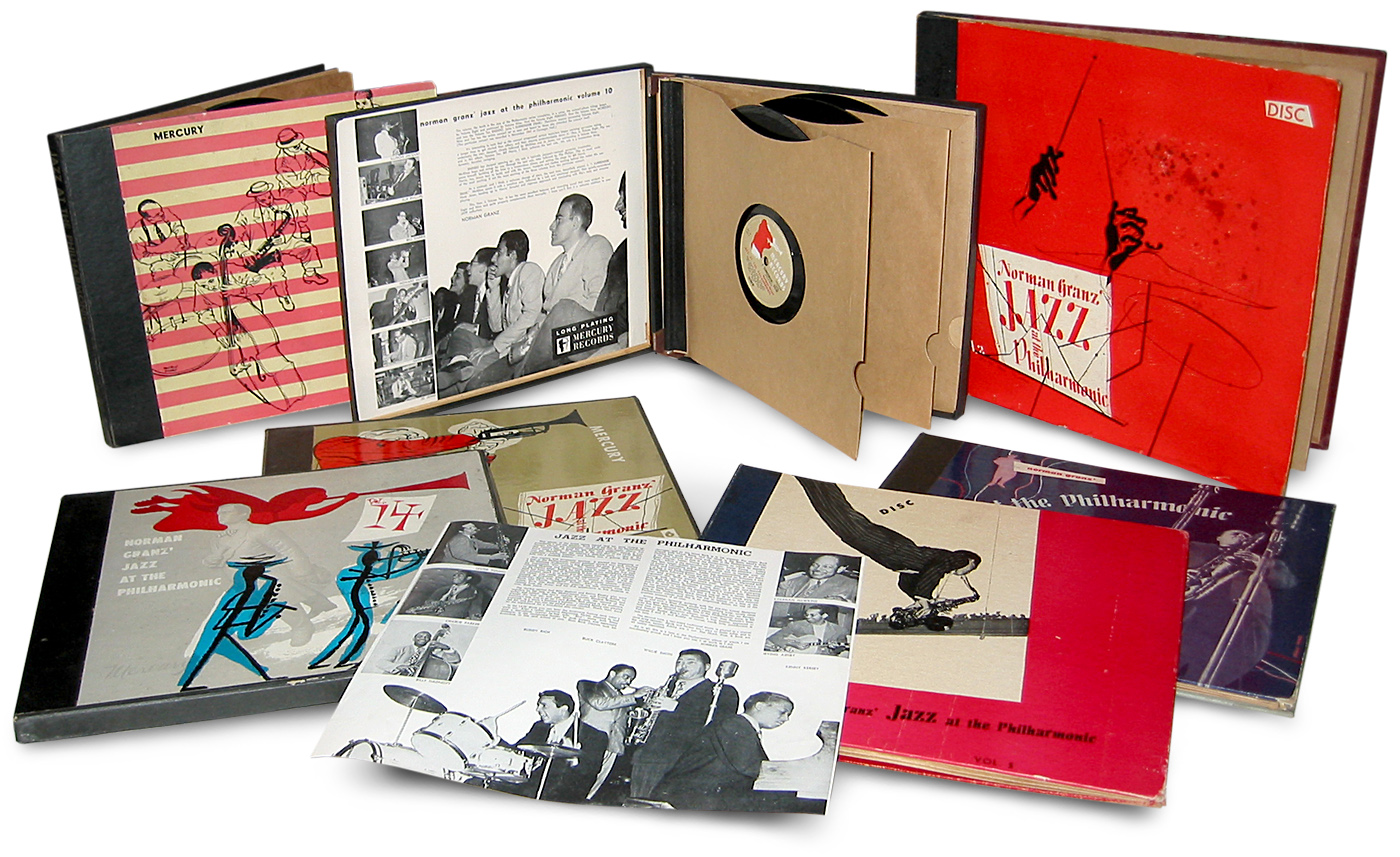
Do I have a complete set of Jazz at the Philharmonic issues? I have know idea. I do know that Norman Granz was the first to come up with the concept of the "jazz reissue." Photo by Gems

Even the most indifferent jazz fan has heard of Jazz at the Philharmonic. And I daresay nearly every jazz fan has at least one JATP disc in their collection. It's hard not to – there are so damn many of them.

The story behind these "jam sessions" is an interesting one. Impresario Norman Granz began organizing casual jams on off nights in Hollywood jazz clubs in the early '40s, featuring musicians who were at liberty and were happy to have a place to play. One stipulation that Granz set was that audiences for his shows be integrated, a demand that was honored by the owners because the jams were so successful. Granz soon began to have bigger ideas.

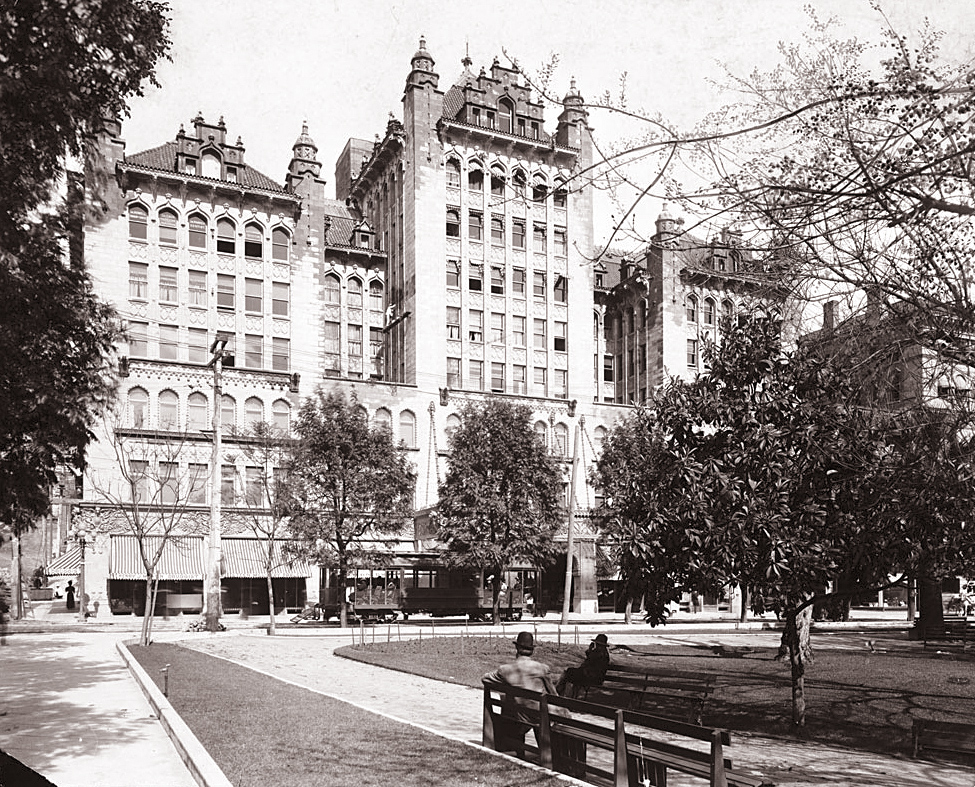
Philharmonic Auditorium
In 1944, a group of Mexican kids were charged with a murder that occurred during the notorious Zoot Suit Riots. Many felt the case was a set-up, and Norman saw an opportunity to expand his battle against prejudice and aid the teens' defense fund while trying out a jam session on an elevated scale. He managed to secure the city's vaunted Philharmonic Auditorium, home of the Los Angeles Philharmonic orchestra, for a single Sunday in July. That afternoon he put on the first of what was promoted as a "real jazz jam session" with an array of stars from his club shows.

The audience went wild, of course, dancing in the aisles and cheering the proceedings vociferously. The auditorium's management was horrified, and Granz was barred from ever producing another show there, but history had been made. The Philharmonic date would be the first of a seemingly endless string of staged jazz jams, all bearing the original venue's name regardless of location.


Granz recorded that first concert and nearly every one thereafter. He issued them all in a confusing series of "volumes," first in multiple-disc 78 rpm sets, then on LP and ultimately on CD. The releases were on the Disc label at first, and then on Mercury, then Clef, Norgran, Verve and ultimately, Pablo. With each label change, the previous JATP volumes were reissued on the new label. The dutiful collector could own "Tea for Two" from Volume 7 on Mercury, Clef and Verve should he or she care to. To add to the confusion, each title in the early days came out on multiple discs. So "Tea for Two" was broken into parts I-IV in the seventh volume of the series of JATP performances. If you weren't tidy with your records, sides could get misplaced pretty easily. That's why there are so many early JATP sets with missing or incorrect records in their sleeves.

Now, all these recordings were owned by Norman Granz – with one exception. That first concert was released by Moses Asch on his Disc imprint. Granz had gone to him trying to interest him in some Ella Logan recordings he'd produced, but Asch demurred. When asked what else he had, Granz pulled out an acetate from the Philharmonic show and Moses had ears for it. So JATP Vol. 1 actually was part of the Asch/Disc/Stinson catalog for many decades. I can only think that this fact must have really rankled Norman, the epitome of the hard-nosed, shrewd businessman.

JATP Vol. 1 itself was reissued numerous times over the years. First on Disc and then on Stinson, it eventually came out on LP in the early '60s. I was working in a record store in the early '70s when I got my copy. It was the first record I'd ever seen on colored vinyl, and even though it had a paltry 12-15 minutes per side, it was one hard-swinging album. Its featured artists did not include Charlie Parker or Lester Young, as Bird was still in New York and unknown at the time and Lester was with Basie and about to begin his disastrous stint in the Army. But Illinois Jacquet is there doing his best "Flying Home" honking, and Willie Smith turns in a stunning performance. Howard McGhee was in California with Coleman Hawkins at the time, and here lays the bop groundwork for Diz and Bird who would arrive the following year. And there's a guitarist whom most jazz fans won't recognize but who has chops to spare. His name is Ulysses Livingston, and he'd been with Fletcher Henderson, the Spirits of Rhythm, the Hawk and Benny Carter. He sounds quite a bit like Charlie Christian and has a very modern sense of harmony.

One other thing. Included in the Stinson JATP record was a brief essay by Leonard Feather on the genesis of that first concert. What is curious about that is the fact that it is a carbon copy of a typed sheet on onion-skin paper. Did Stinson have some sort of antediluvian typewriter that hammered out originals and half-a-dozen carbons in a single pass, whereupon some assembly-line grunt stuffed a copy into each album jacket? Or was this LP meant for some jazz critic with a special note from Leonard tucked into it? We'll never know, and I've never seen this article anywhere else. But here it is for you to check out.

Another one more thing. If you're a stone Prez fan, you know about "Jammin' the Blues." But if you've never seen the Gjon Mili film, you're in for a treat. Norman Granz did the A&R work for it, picking the musicians and selecting the tunes. His inspiration, of course, came from those Hollywood club sessions and the JATP concert. The ironic thing is, even with the editing and blocking involved in the film, the music probably comes closer to the sound of a true jam session than anything that ever happened on a JATP stage. Here's the film in high-def, courtesy of uiramoreno and YouTube. Lester is the epitome of cool, and watch closely when Big Sid hands the drums off to Papa Joe. As Luca, my Swiss alto-playing friend says, "Keeling!"


As always, these music files were ripped from the original vinyl with only a mild cleaning of pops and clicks.


Norman Granz Presents Jazz at the Philharmonic, Vol. 1
Stinson SLP 23
Howard McGhee, Joe Guy, tp; Willie Smith, as; Illinois Jacquet, Charlie Ventura, ts; Garland Finney, p; Ulysses Livingston, g; Red Callendar, b; Gene Krupa (Chicago Flash), d.
Philharmonic Auditorium, Los Angeles, CA; February 12, 1945

1. How High the Moon
2. Lady Be Good 

Monday, February 13, 2012

Deconstructing Jazz

No, not the ghost of Jacob Marley. It's French jazz critic and author Andre Hodeir, a bit more advanced in years than when he had his portrait taken for the Savoy release below. From olivier.roller.free.fr

They say that those who have talent play jazz, and those who have no talent write about jazz. (I don't know if they really say that, or if it's even true, but it seems like a nice smart-alecky way to start off this posting.)

When I was first getting into this music back in the '70s, a jazz pal introduced me to the work of Andre Hodeir. He had written a wonderful book immodestly titled "Jazz: It's Evolution and Essence" and I plowed through its chapters on Bird and the Cool players, thoroughly enjoying (though not always understanding) his analyses. He had a very hip, improvisatory lilt to his prose (courtesy of his translator David Noakes, perhaps) and I thought he read like jazz sounded. Not like Leonard Feather or the guys who wrote for Downbeat. Hodeir swung.

Many years later I was digging through the miscellaneous bin in a great used record store that used to be on Congress St. in downtown Portland, Maine. I came across a mint Savoy recording, one of those '50s records with a heavy boards and a color photo laminated in glossy plastic on the cover. This one featured some all-stars from the Savoy roster playing the music of – whad'ya know? – Andre Hodeir. I had no idea the guy wrote music, and here was a full LP of his compositions. Theory meets praxis.

The record seemed worth the three bucks they were asking, so I bought it and took it home for a listen. Since Hodeir's prose was so hip, I thought it was a cinch the guy's tunes would be tres cool. Wrong.

What we have here are nine very dense, occasionally unmanageable pieces that are consistent largely in the fact that not one of them swings. There are good solos, and some fine moments, but overall Hodeir's music falls flat. If you read his notes on the back cover, you see that he was at pains to meld concept with composition. But he seems to have left out the most salient element of all – the swing. To paraphrase Duke, these numbers don't mean a thing. On that level anyway.

So why offer this LP here? Well, for one reason, you'll never see it on i-Tunes, or anywhere else for that matter. And for another, any record with Hal McKusick and Annie Ross is of interest. But mostly I'm curious to hear what you think of Hodeir's tunes. Don't get me wrong – the music is well played and the compositions are thoughtful (perhaps overly thoughtful). I just think that if you know Hodeir's texts, you might want to check out his tunes.

As always, these files were ripped from the original vinyl with only a very minor cleaning of the sound.


American Jazzmen Play Andre Hodeir's "Essais"
Savoy 12104

Idrees Sulieman, Donald Byrd, tp; Frank Rehak, tbn; Hal McKusick, as, b cl;
Bobby Jaspar, ts, fl; Jay Cameron, bar; Eddie Costa, vbs; George Duvivier, b;
Bobby Donaldson, d; Annie Ross, v.
New York, NY; March 5, April 4*, 1957

1. On a Standard
2. On a Riff
3. Criss Cross
4. Paraphrase
5. On a Blues
6. The Alphabet*
7. Esquisse I
8. Paradoxe II*
9. Esquisse II*